
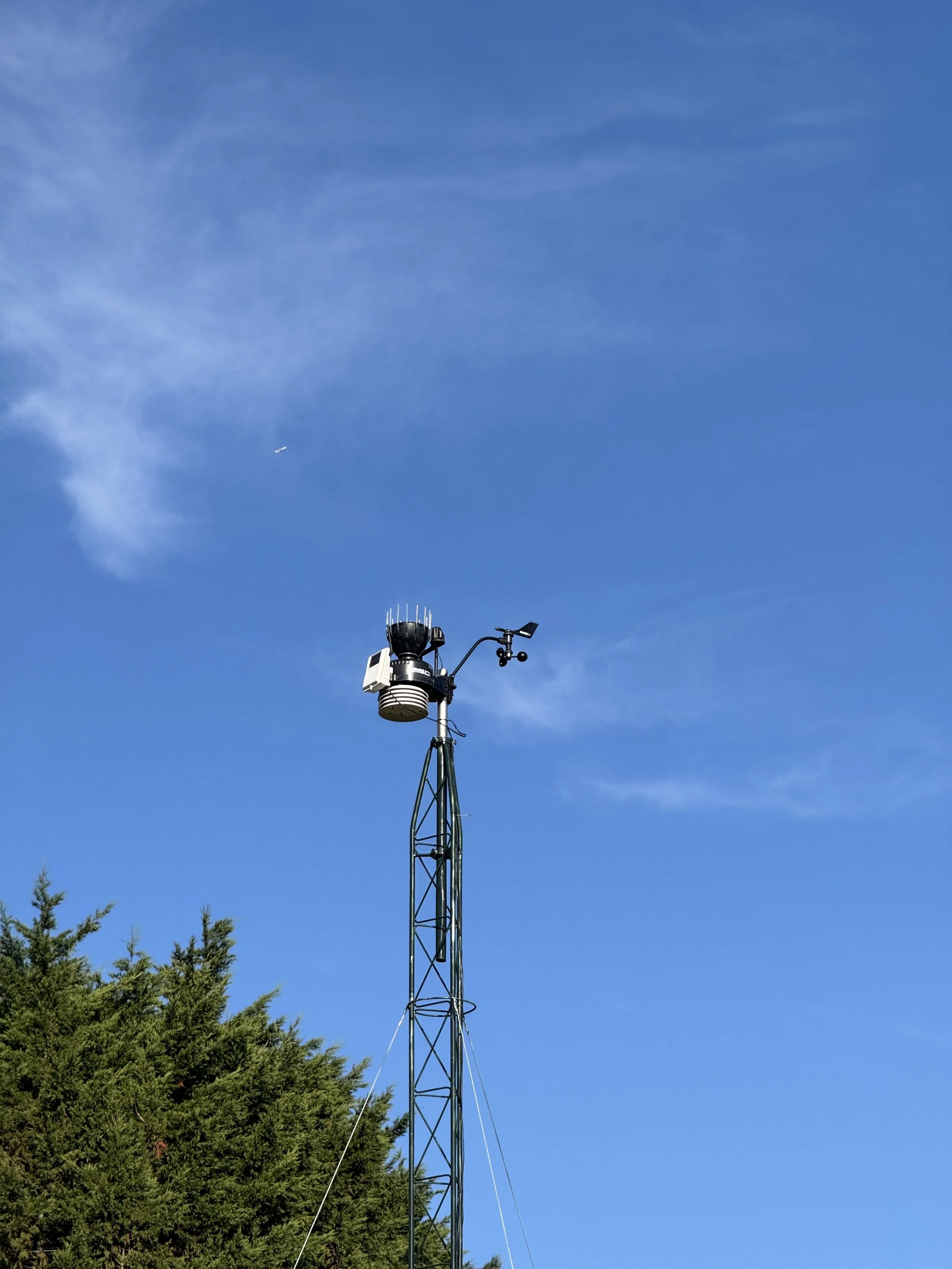
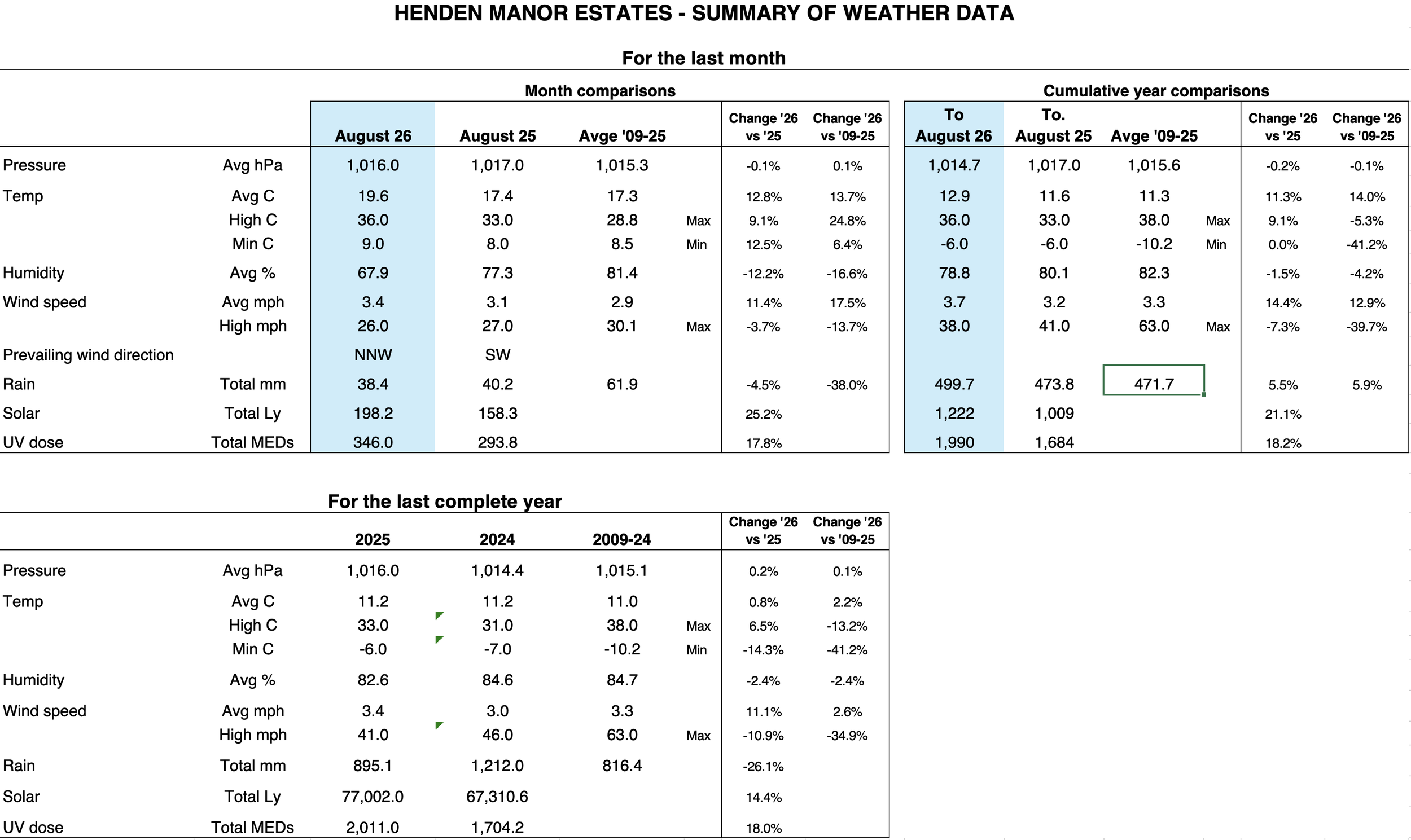
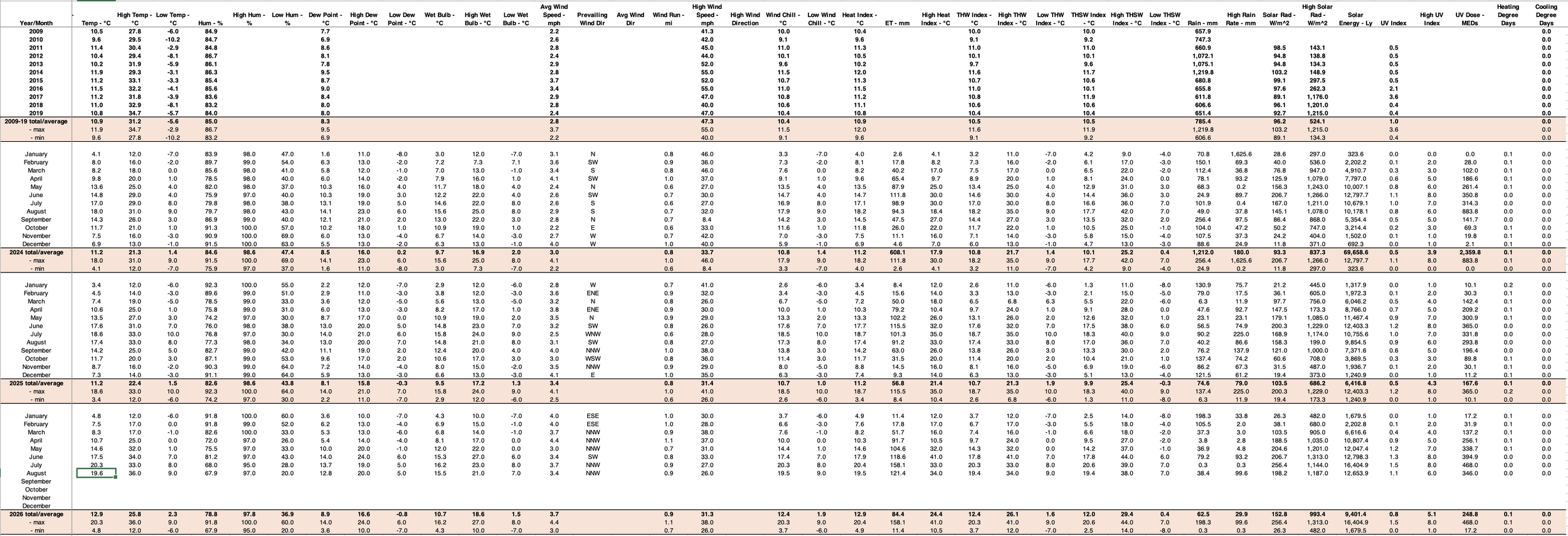
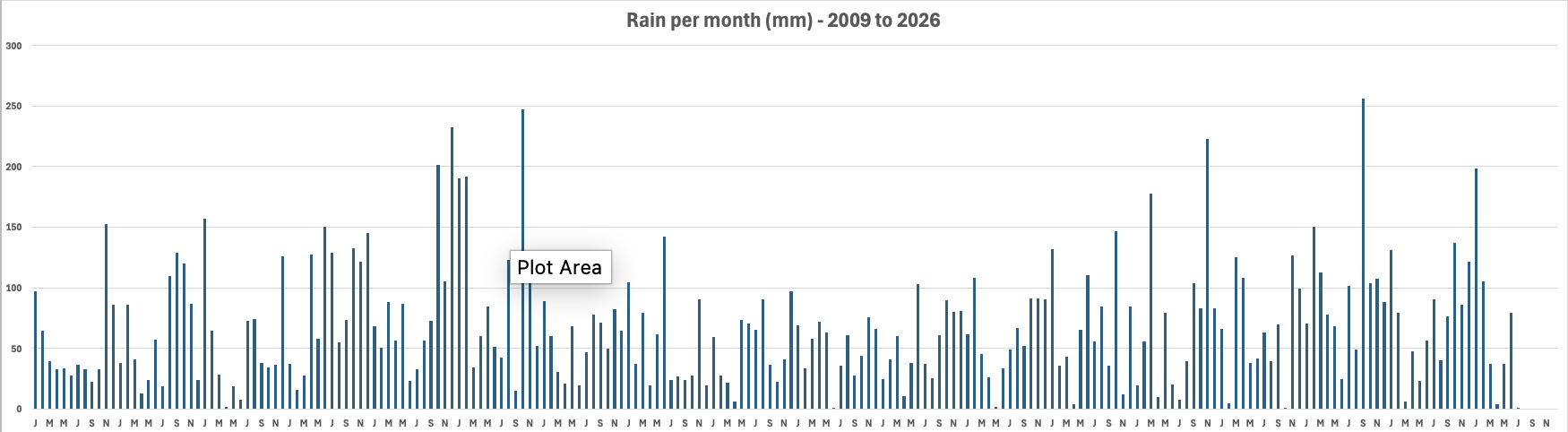
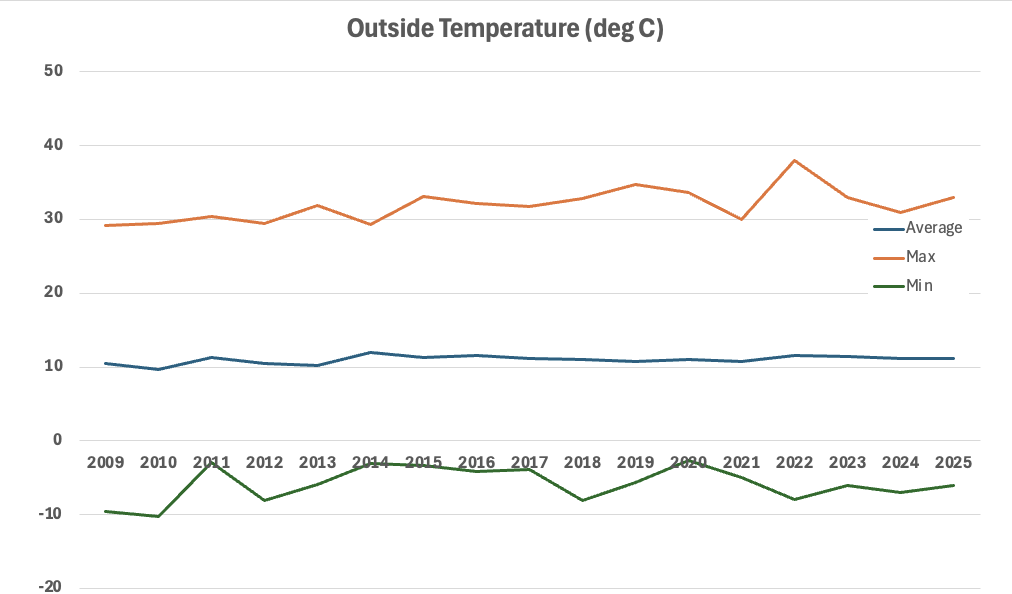
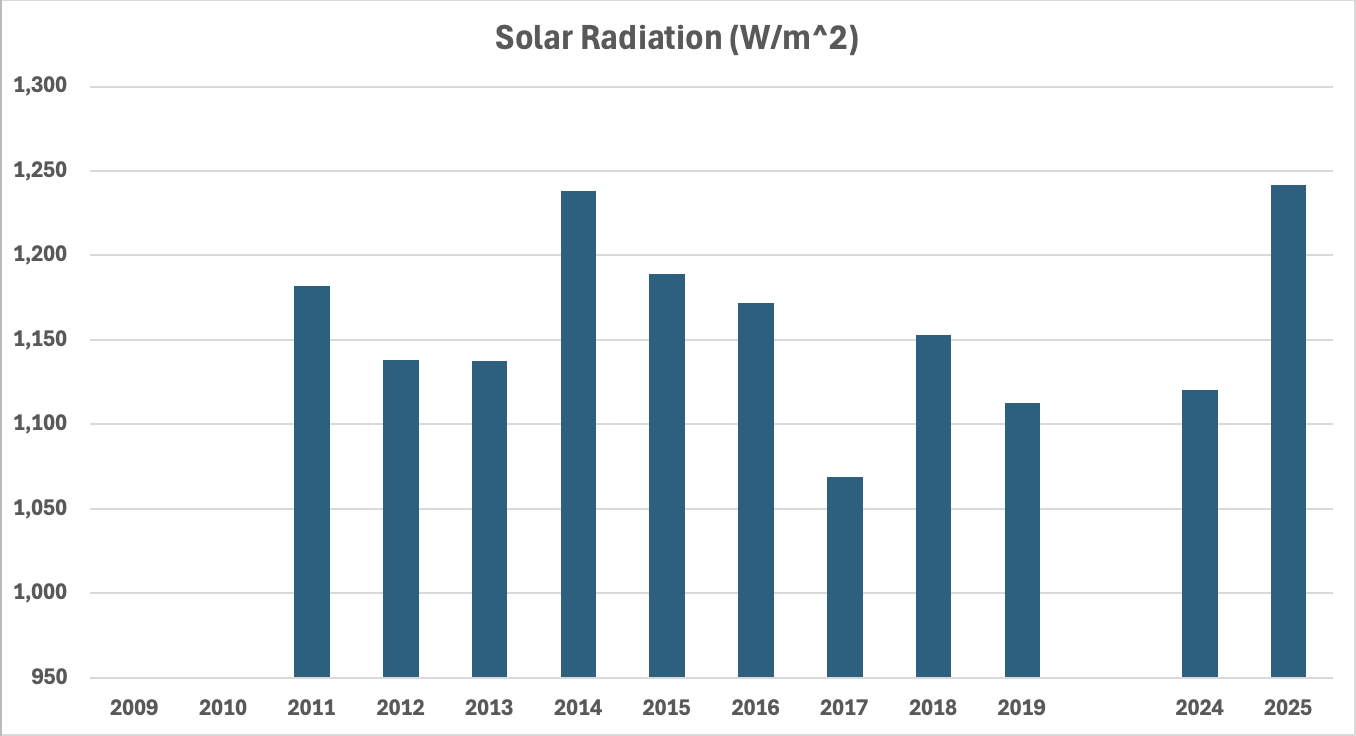
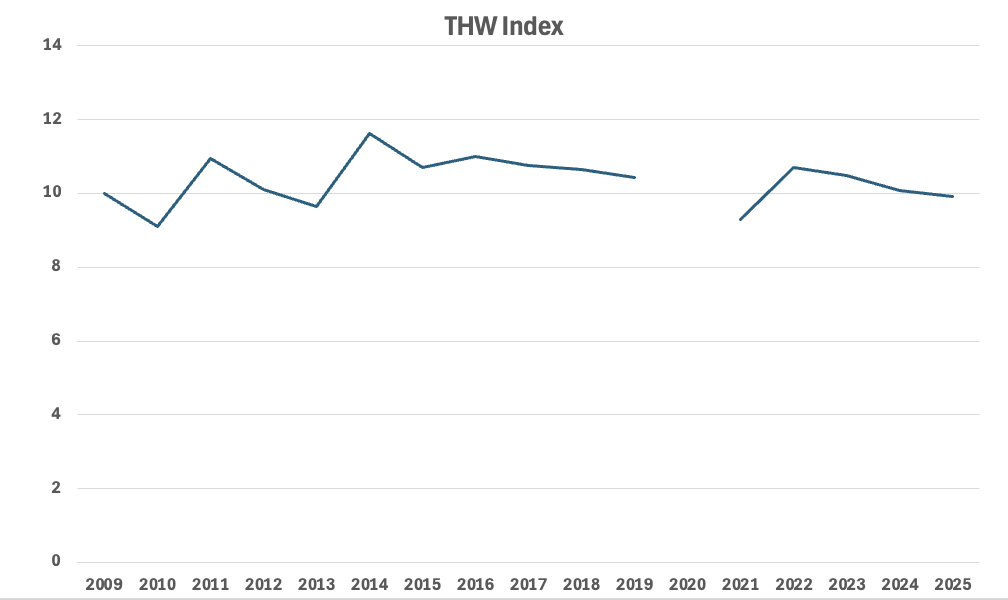
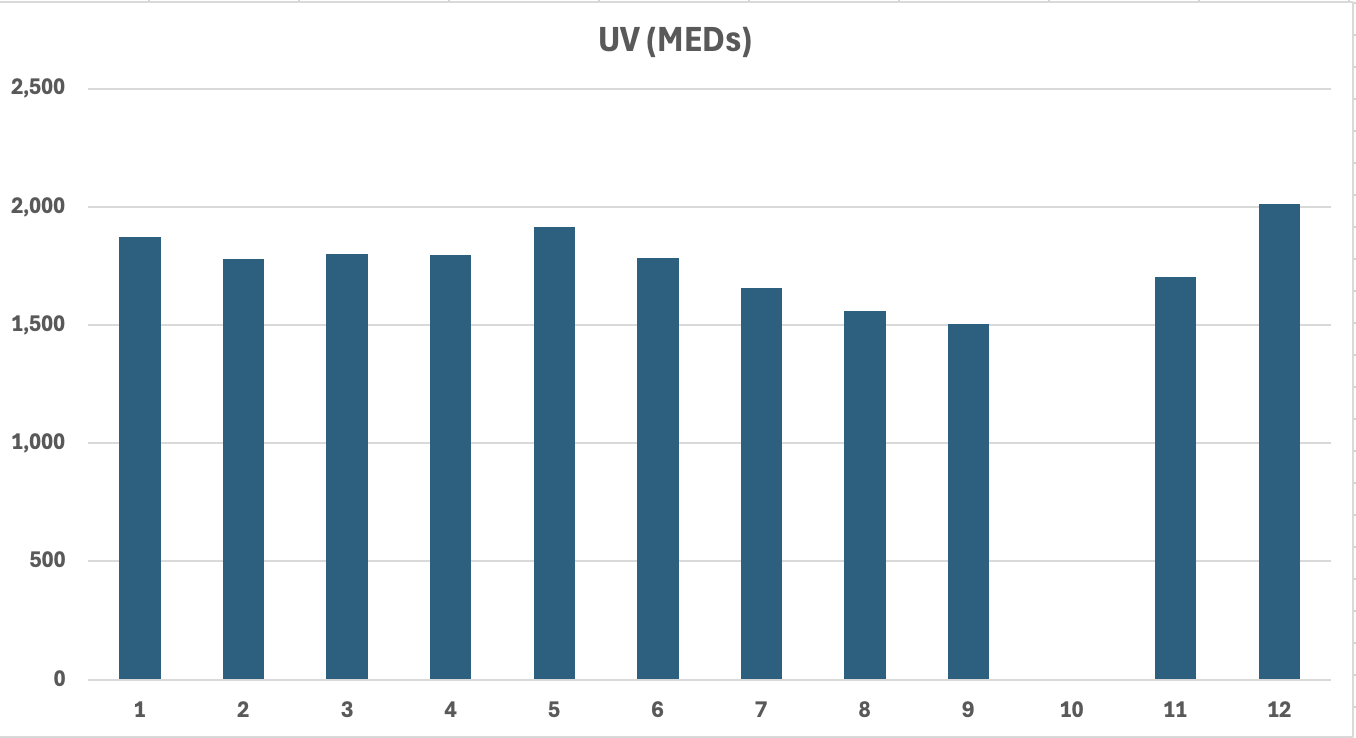
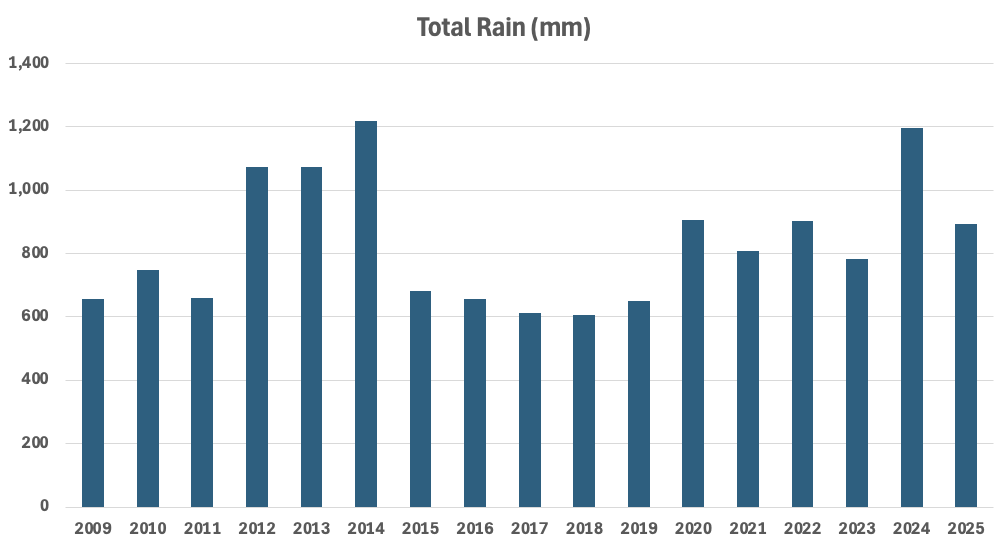
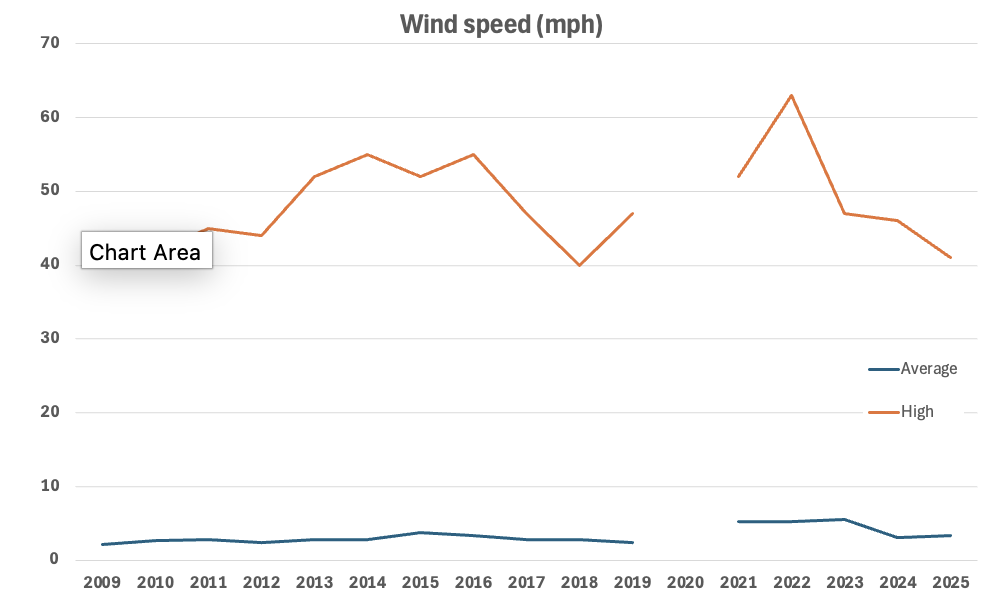
Since 2009 we have recorded the weather at Henden using a Davis Pro weather station. We had a hiatus from 2020 to the start of 2024 year, which means that we lack the full suite of data for the estate for that period. We drew, therefore, on data largely from a Davis Pro weather station and neighbouring Bough Beech (2021 to 2023) and to a much lesser extent from the Met Office station at Kenley airfield (2020).
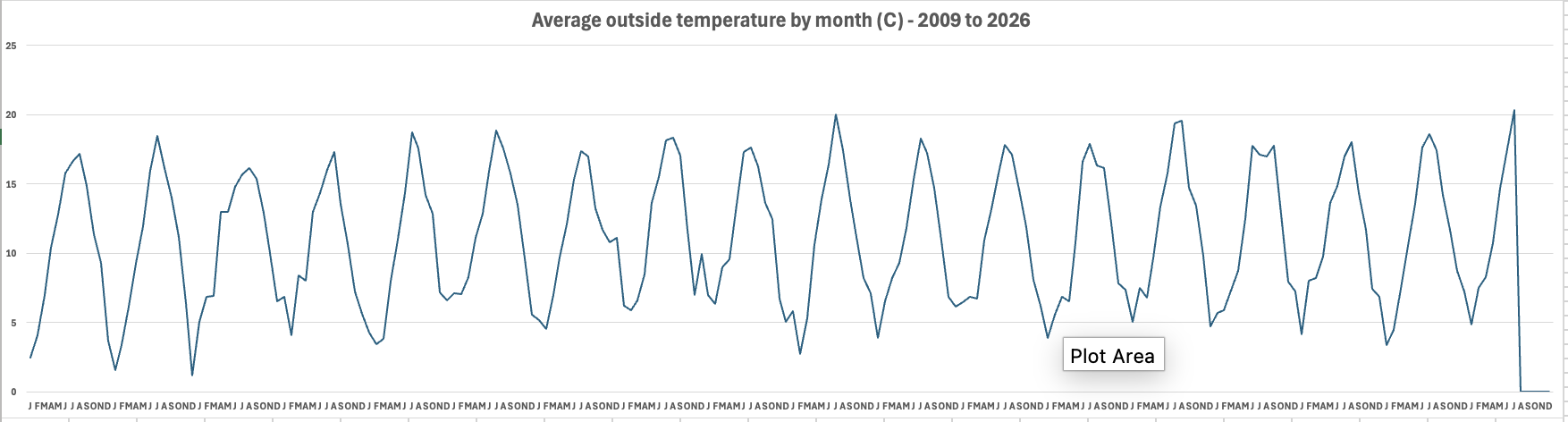
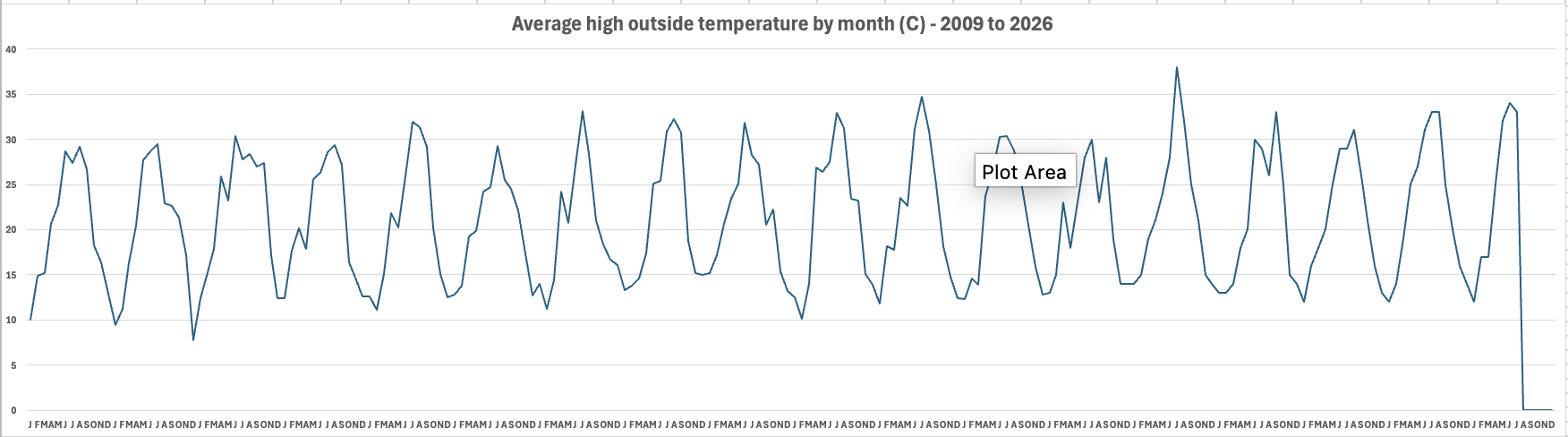
We have tried to create summary tables and charts that give you a quick review of the most used data. We hope that you will find the data of interest.
Below the tables and charts we have included a section that covers what the climate was like around Henden in Tudor times. It makes for interesting reading.
Monthly report
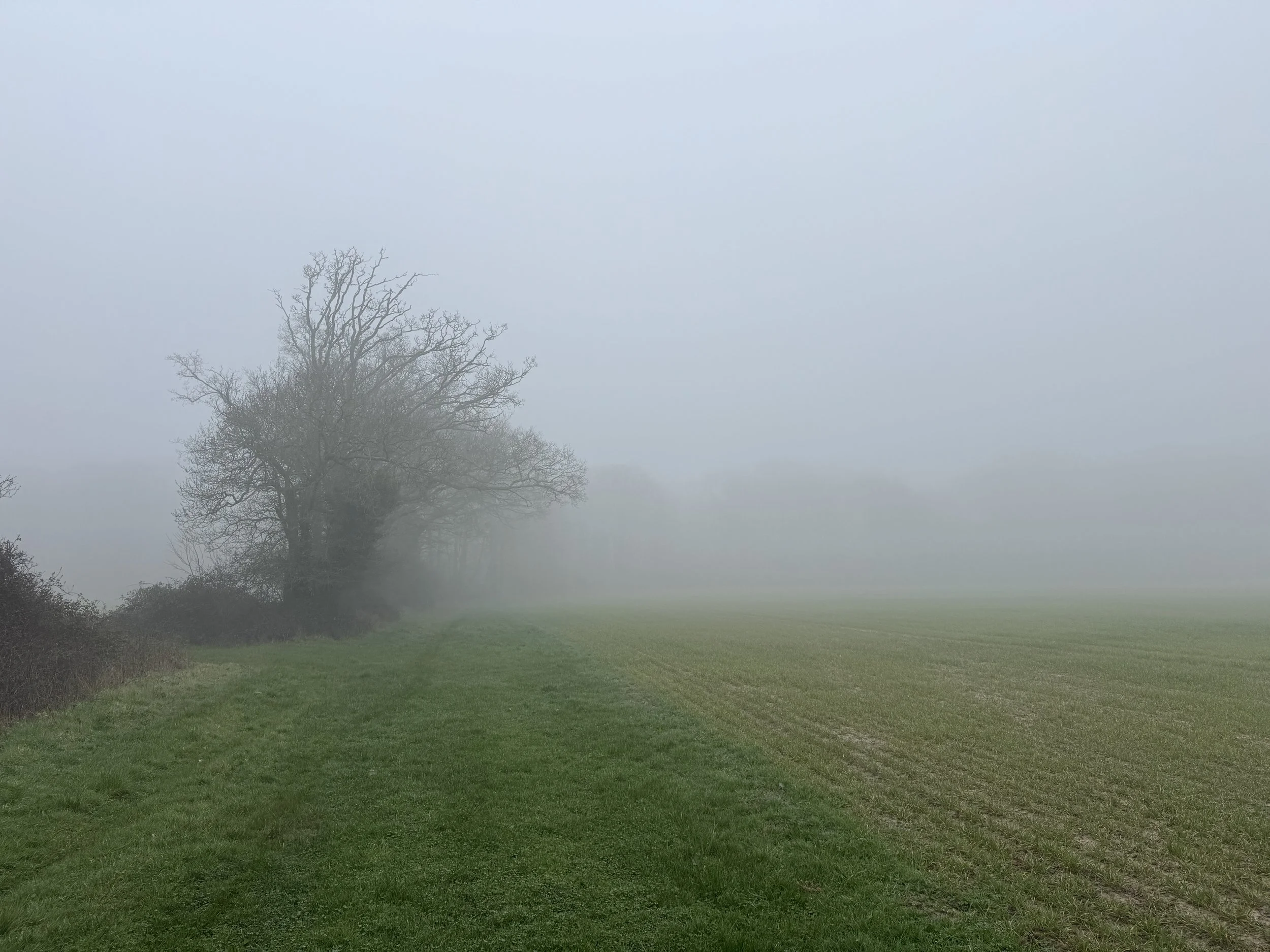
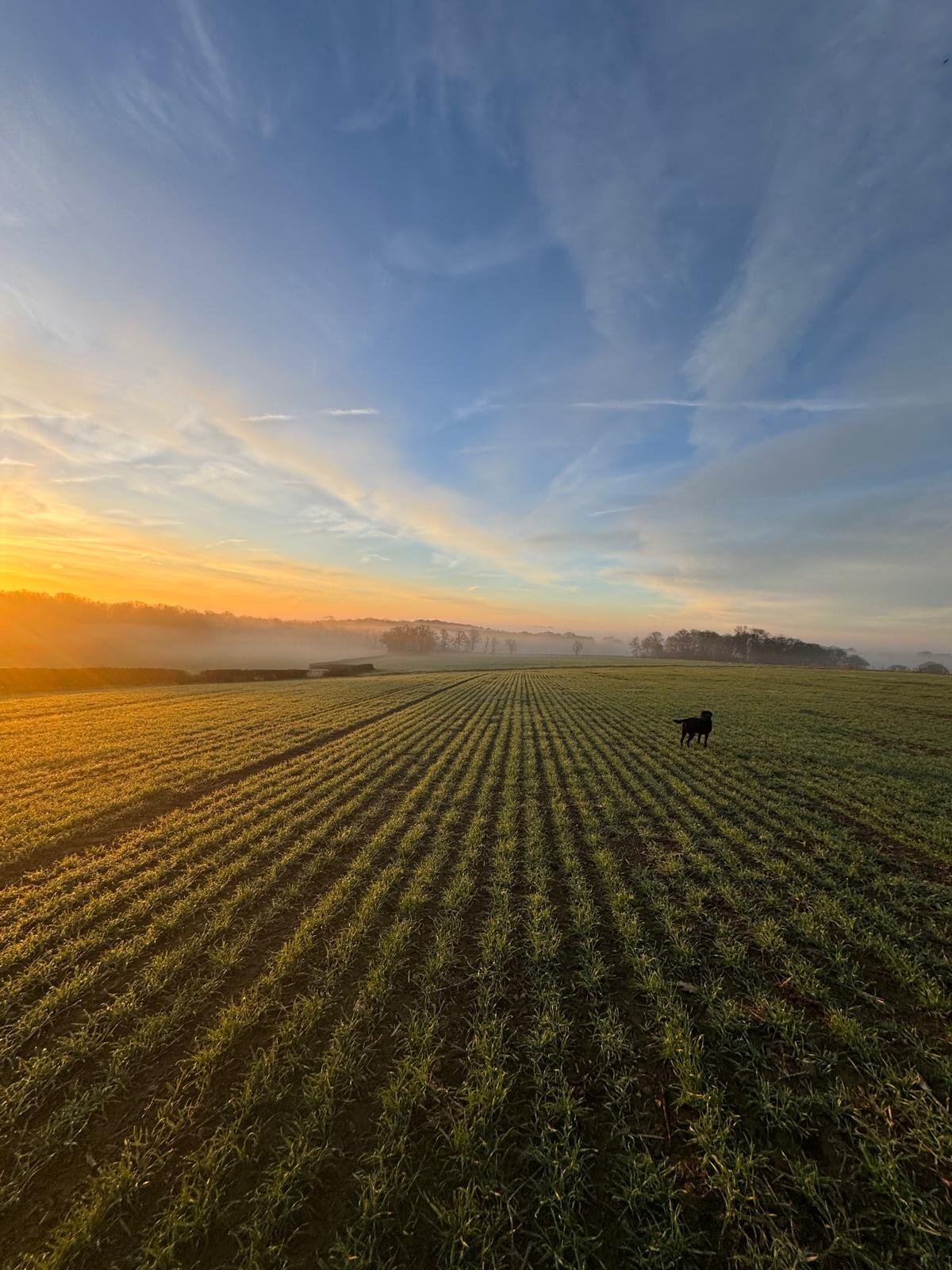
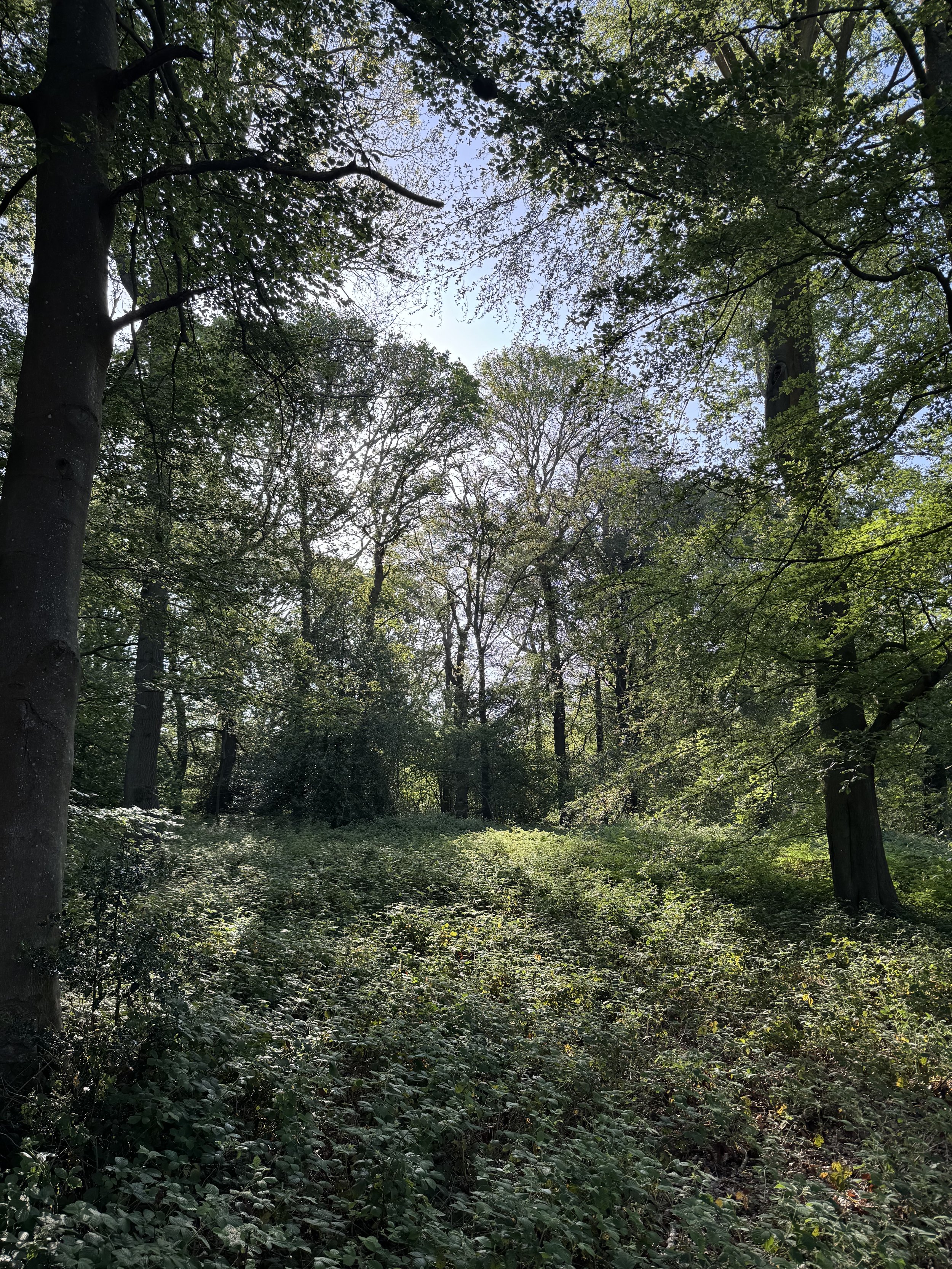
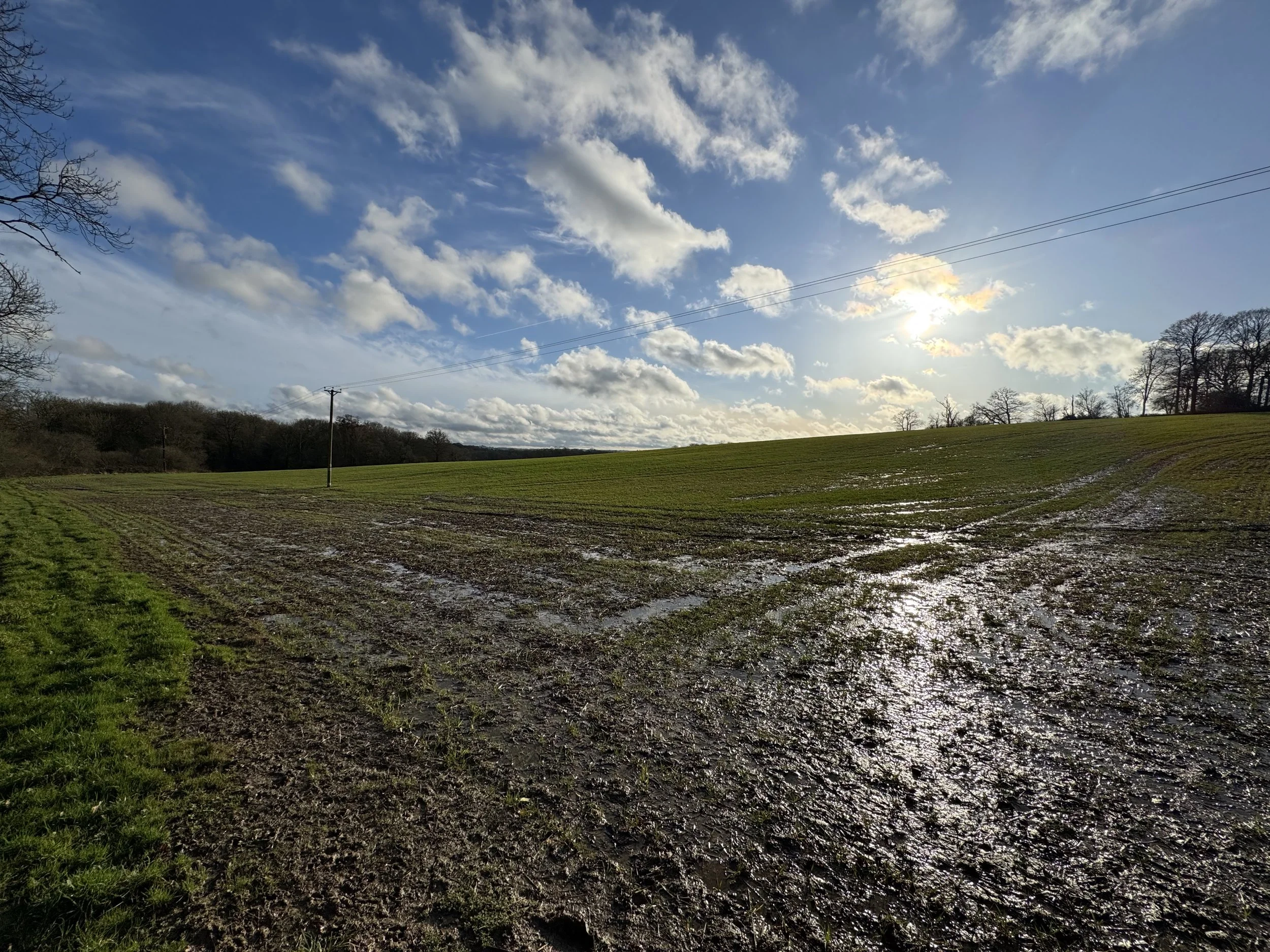
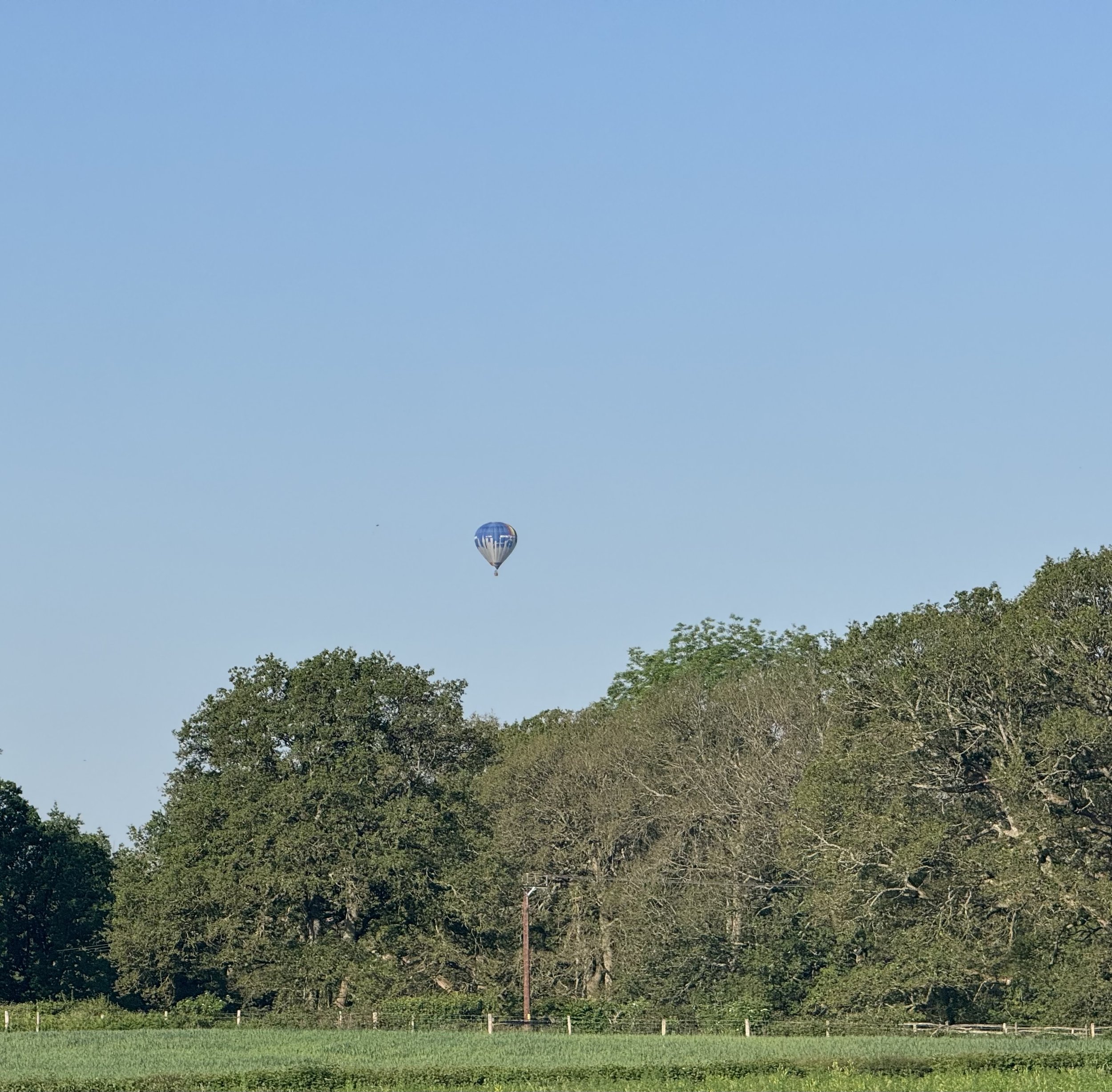
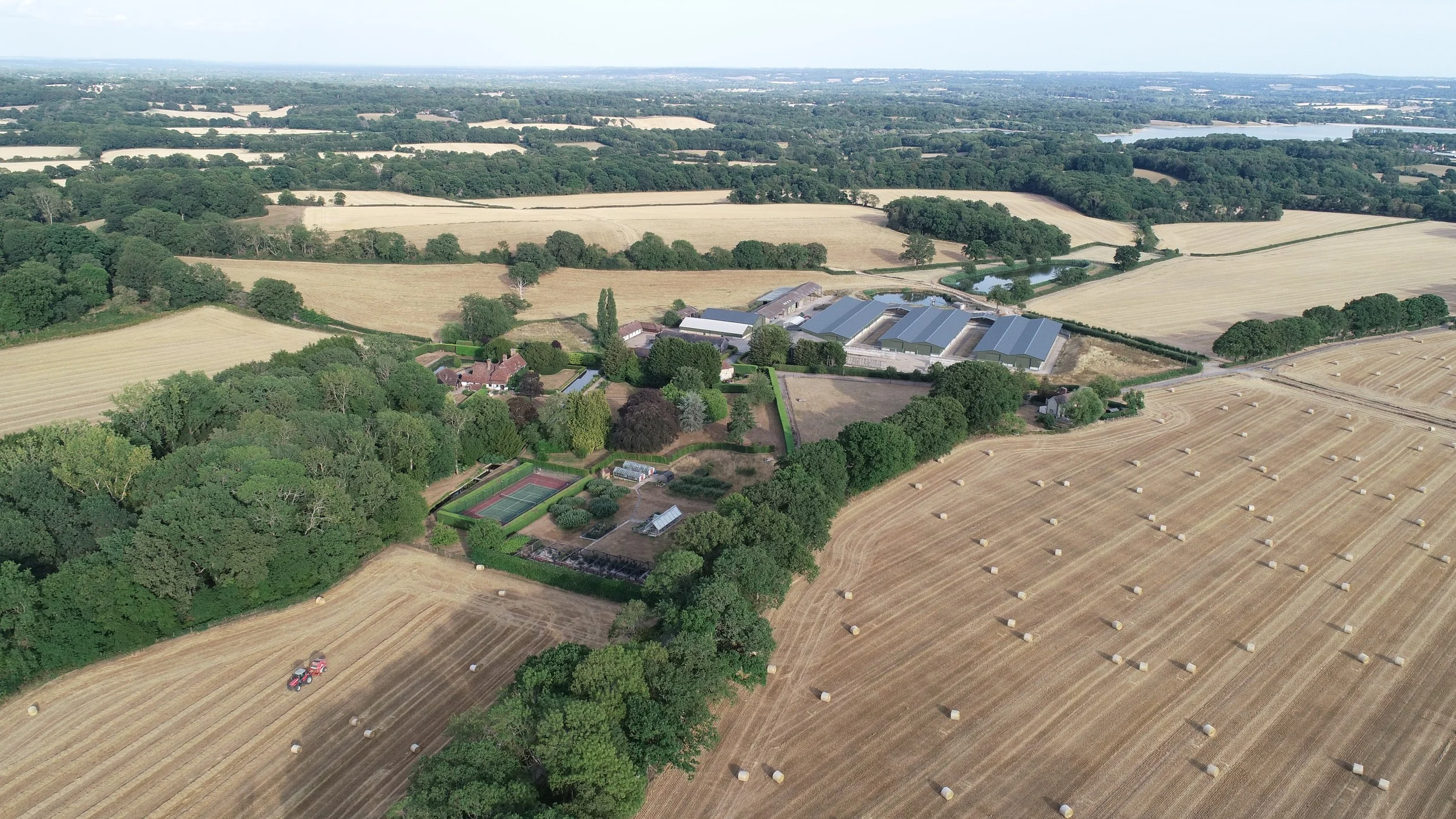
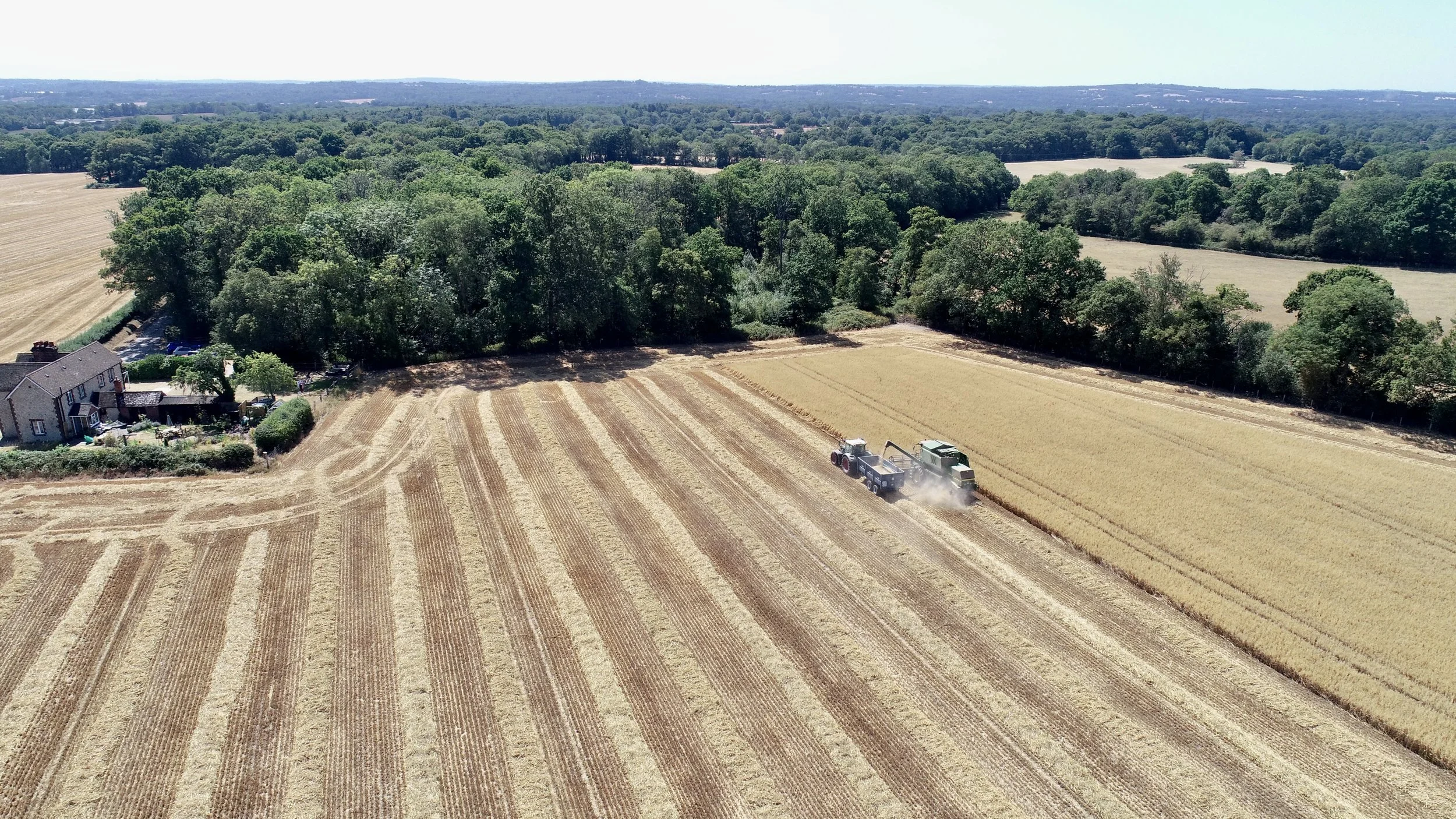
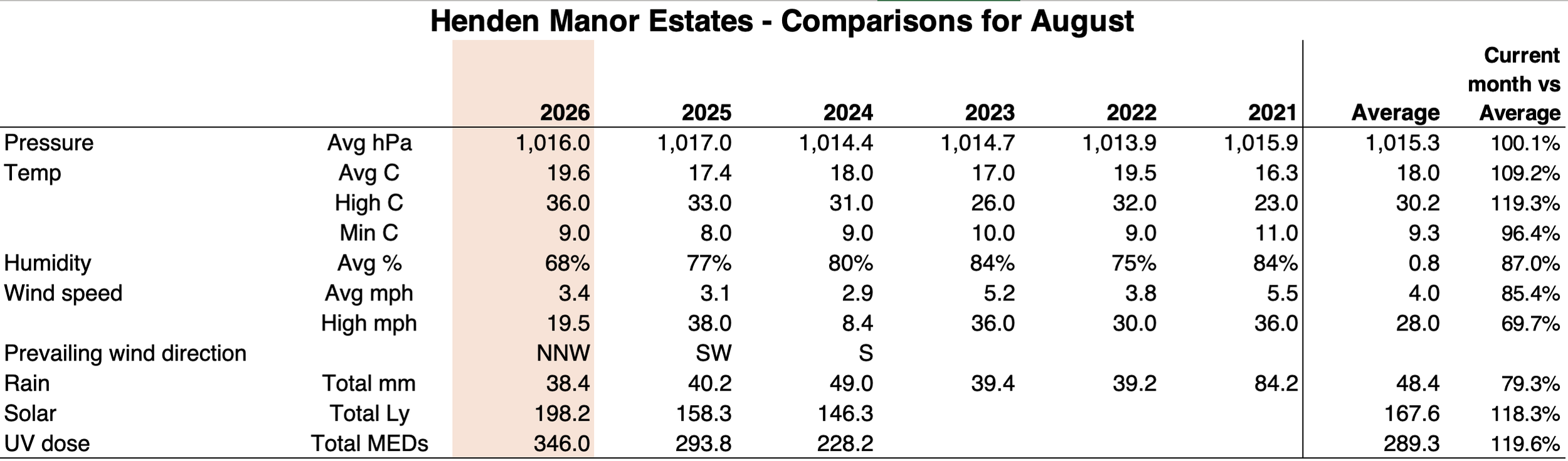
The key feature in August was the high maximum temperature, which was 19% higher than the previous five years. Rainfall was not unreasonable, albeit coming at the end of the month, being 79% of the rain recorded in the month over the previous fives years and multiple times higher than that recorded in July (38.4mm vs 0.3mm). There continued to be a fair bit of wind, which drew water out of the ground. The rain that started towards the end of the month and into September, however, has already had its impact with our land being a lot greener than it was only two weeks ago.
The Climate in Kent during the Tudor times
While looking at the history of Henden and recording weather patterns today, we thought it would be interesting to find out how the weather faired during Tudor times. What this work reveals is a period of staggering extremes, pushing temperatures to limits that would shock us even today.
When references are made to temperatures remember that the thermometer was not invented until the 17th Century. So, to gauge temperatures during Tudor times modern climate scientists used a mixture of tree-ring analysis as well as highly detailed local documentary records.
During the Tudor period the climate in Kent as well as Britain generally was shifting into the most volatile phase of the “Little Ice Age” (1300 to 1850). It was a time defined by dramatic swings, extreme weather anomalies, and a noticeable overall cooling trend, particularly as the 16th century progressed. Rather than just being uniformly freezing, the Tudor climate was highly erratic, characterized by bitterly sharp winters, unseasonably wet summers, and a few historic, blistering droughts.
The Winter Deep Freezes
While the iconic "Frost Fairs" on the River Thames peaked later in the 17th century, the Tudor period laid the groundwork for them. Winters were generally longer and significantly colder than they are today. The Thames froze completely multiple times during the Tudor period (notably in 1506, 1537, 1564, and 1590). In the winter of 1536–37, King Henry VIII famously travelled down the frozen river from central London to Greenwich Palace by sleigh.
In rural Kent, these prolonged frosts made the ground solid from December through March, making agricultural work all b ut impossible as iron ploughs could not penetrate the frozen earth. Livestock frequently perished in the fields from a lack of forage and extreme cold.
In terms of temperature, when the cold easterly winds blew in from Siberia or a high-pressure system parked itself over Scandinavia, the winter temperatures in Kent plummeted below what we experience today. During the coldest decades of the late 16th century, the average winter temperature was roughly 1.5-2.0°C colder than the average recorded in the 20th-century, which itself was 3.5-4.0°C.
During the worst historic freezes, however, for example the winters of 1564 and 1590, nighttime lows in the rural parts of Kent, such as the High Weald or the Downs, routinely dropped to between -15°C and -20°C. During the daylight hours temperatures frequently failed to rise above -5°C, keeping the snow packed and rivers frozen for months at a time. This caused tha ground to freeze solid to a depth of a few feet.
The Great Tudor Droughts
This period was not just cold, however. It also witnessed some of the most intense heat and prolonged droughts in our history. The period between 1538 to 1541 saw consecutive, blistering summers. The summer of 1540 was so hot and dry that Kentish cherries were reportedly being picked before the end of May, and wine grapes were fully ripe by July. By 1541, the drought was so severe that the River Thames ran at an historically low level. Indeed, the flow was so weak that saltwater from the sea pushed all the way up past London Bridge, even at low tide. This made local water supplies brackish, which in turn triggered widespread outbreaks of dysentery (often called "the Ague") across the Home Counties.
In terms of temperatures, the summer heatwaves were arguably more severe than the cold snaps. The 16th Century featured periods of intense solar forcing and massive soil-desiccation loops, where dry soil prevents cloud formation. This led to even more intense heat. The megadrought of 1540 is widely considered by climatologists to be one of the most statistically extreme weather events in European history. The spring and summer temperatures across Western Europe were an incredible 5°C to 7°C above the historical baseline. During the peak of the 1540 heatwave in July and August, daily maximum temperatures in southern England and Kent it is reckoned that temperatures breached 40°C. This was not, however, just a heatwave during the peak summer months. The intense heat lasted from March through to October. Indeed, it was so hot for so long that leaves withered and dropped off the trees in July as if it were autumn, while the water in Kentish streams evaporated entirely. In some instances forests across the south of England spontaneously caught fire.
Deluges and Years of no Summers
When the droughts broke, they often broke with catastrophic rainfall. The middle and later years of the 16th century saw a major increase in severe storms and unseasonal summer rains. In 1527, for example, rain fell across England nearly every single day from mid-April to early June. This caused seeds to rot in the ground and spoiled the harvest.
In the 1590s, the late Elizabethan period, the climate was plagued by cool, wet, and overcast summers. The lack of sunlight and persistent rain led to four consecutive years of catastrophic harvest failures between 1594 and 1597. This brought localized famine and economic distress to the agricultural communities of the Kentish Weald and Downs.
Conclusion
Ultimately, living in Tudor Kent meant adapting to a climate where predictable seasons were a luxury, and a single year's erratic weather could mean the difference between a bountiful harvest of fruit and grain or a winter of severe hardship. It seems as though we are also going to have to adapt today!